
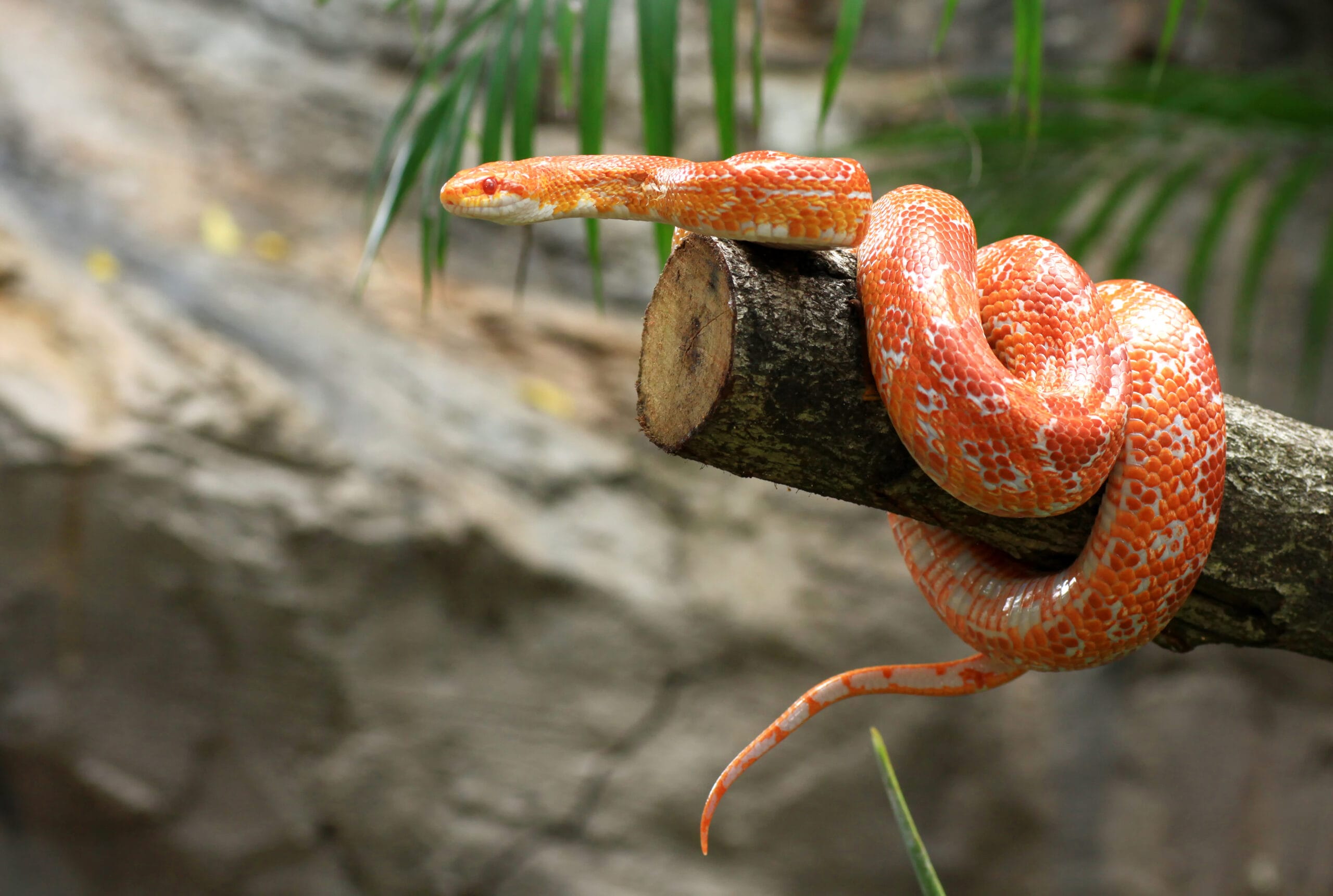
Corn snakes (Pantherophis guttatus) are widely considered the best beginner snake species in the world. They are hardy, calm, affordable, and forgiving of small mistakes, making them perfect for first-time snake owners.
This complete corn snake care guide covers everything you need to know — from enclosure setup and substrate choices to feeding schedules, temperature gradients, humidity, handling, and common health issues.
1️⃣ Corn Snake Overview
Corn snakes are non-venomous colubrid snakes native to the southeastern United States. In the wild, they inhabit forests, grasslands, and abandoned buildings, where they hunt rodents.
Thanks to decades of captive breeding, corn snakes are now available in dozens of morphs, are well-adapted to captivity, and rarely suffer from stress when kept properly.
2️⃣ Are Corn Snakes Good for Beginners?
Yes — corn snakes are often ranked #1 among beginner snakes.
Beginner-friendly traits:
- Calm, docile temperament
- Rarely defensive or aggressive
- Consistent feeding response
- Simple temperature and humidity needs
- Affordable to buy and maintain
Corn snakes tolerate beginner mistakes far better than more sensitive species like ball pythons or boas.
3️⃣ Corn Snake Size, Growth & Lifespan
- Hatchlings: 8–12 inches
- 1 year old: 2–3 feet
- Adults: 4–6 feet
- Average lifespan: 15–20 years
- Potential lifespan: 25+ years with excellent care
They grow steadily and do not experience sudden growth spurts.
4️⃣ Corn Snake Temperament & Behavior
Corn snakes are naturally curious, alert, and active — especially at dusk and night.
Typical behavior:
- Exploring enclosure edges
- Burrowing under substrate
- Climbing branches
- Hiding during daylight
With regular gentle handling, most corn snakes become very tolerant and relaxed.
5️⃣ Corn Snake Enclosure Setup (Detailed)
Minimum enclosure size:
- Juveniles: 20-gallon long
- Adults: 40-gallon breeder (minimum)
Larger enclosures (4x2x2 ft) are excellent for adults if cluttered properly.
Enclosure requirements:
- Secure locking lid (escape-proof)
- Horizontal space over height
- Proper ventilation
Corn snakes are expert escape artists, so enclosure security is critical.
6️⃣ Temperature, Heating & Thermostats
Corn snakes require a thermal gradient.
Ideal temperatures:
- Warm side: 85–88°F (29–31°C)
- Cool side: 75–78°F (24–26°C)
- Night drop: 72–75°F (22–24°C)
Best heat sources:
- Heat mat (under tank, thermostat controlled)
- Ceramic heat emitter
- Radiant heat panel (PVC enclosures)
❗ Always use a thermostat — overheating is more dangerous than mild under heating.
7️⃣ Humidity Requirements & Control
Corn snakes thrive in moderate humidity.
- Ideal humidity: 40–60%
- Shedding period: 55–65%
Ways to control humidity:
- Proper substrate choice
- Water bowl placement
- Occasional light misting
- Humid hide
8️⃣ Best Substrate for Corn Snakes (Expanded & Updated)
Substrate plays a major role in humidity control, comfort, and cleanliness.
✅ BEST SUBSTRATE OPTIONS
🟢 Aspen Shavings
- Excellent for burrowing
- Dry and clean
- Easy spot cleaning
⚠️ Can mold if kept too moist.
🟢 Coconut Fiber (Coco Fiber)
Highly recommended
- Excellent humidity control
- Soft and natural
- Safe if accidentally ingested
- Ideal for shedding support
Best for keepers struggling with dry environments.
🟢 Coconut Husk (Coco Husk / Chips)
- Long-lasting
- Resistant to mold
- Great for naturalistic setups
- Holds humidity without becoming soggy
Often mixed with coco fiber for best results.
🟢 Cypress Mulch
- Good moisture retention
- Natural look
- Comfortable surface
❌ SUBSTRATES TO AVOID
- Pine or cedar (toxic oils)
- Sand
- Gravel
- Walnut shells
⭐ Best Beginner Recommendation:
Coco fiber or coco fiber + coco husk mix
This combination provides ideal humidity, safety, and comfort.
9️⃣ Hides, Decor & Environmental Enrichment
Corn snakes feel safest in cluttered environments.
Must-have items:
- Minimum 2 hides (warm & cool side)
- Humid hide
- Branches for climbing
- Fake plants or cork bark
A stressed snake is more likely to refuse food.
🔟 Corn Snake Feeding Guide (In Depth)
Corn snakes eat rodents exclusively.
Feeding size rule:
Prey should be no wider than the thickest part of the snake.
Feeding schedule:
- Hatchlings: Pinky mice every 5–7 days
- Juveniles: Fuzzies every 7 days
- Sub-adults: Hoppers every 7–10 days
- Adults: Adult mice every 10–14 days
Feeding tips:
- Use frozen-thawed prey only
- Thaw completely and warm
- Feed inside enclosure
- Avoid handling for 48 hours after feeding
1️⃣1️⃣ Water, Hydration & Soaking
- Fresh water available at all times
- Bowl large enough for soaking
- Change water daily
Occasional soaking is normal, especially during shedding.
1️⃣2️⃣ Shedding Cycle & Prevention of Problems
Signs of shedding:
- Dull coloration
- Cloudy blue eyes
- Reduced appetite
Prevent stuck shed:
- Maintain proper humidity
- Provide humid hide
- Avoid handling during shed
A healthy shed should come off in one complete piece.
1️⃣3️⃣ Common Health Issues & Warning Signs
Watch for:
- Wheezing or open-mouth breathing
- Excessive soaking
- Regurgitation
- Mites or tiny black dots
- Retained eye caps
Early veterinary care prevents serious issues.
1️⃣4️⃣ Cleaning & Maintenance Schedule
Daily:
- Check temperatures
- Replace water
Weekly:
- Spot clean waste
- Wipe glass
Monthly:
- Full substrate replacement
- Disinfect enclosure
1️⃣5️⃣ Corn Snake Cost Breakdown
Initial costs:
- Corn snake: $40–100
- Enclosure & equipment: $200–400
Monthly costs:
- Food: $5–10
- Electricity: minimal
Corn snakes are one of the most affordable reptiles to own.
1️⃣6️⃣ Pros & Cons of Corn Snakes
Pros:
✔ Excellent for beginners
✔ Calm and handleable
✔ Easy feeding
✔ Affordable care
Cons:
✘ Escape artists
✘ Long-term commitment
✘ Nocturnal activity
1️⃣7️⃣ Beginner FAQs
Can corn snakes live together?
No, they should be housed individually.
Do corn snakes bite?
Rarely, and bites are harmless.
Are corn snakes dangerous?
No — they are non-venomous and safe.
Final Thoughts
Corn snakes are one of the best pet snakes for beginners. With proper enclosure setup, correct substrate (especially coco fiber or coco husk), and consistent feeding, they thrive in captivity for decades.
At BeginnersSnakes.com, our goal is to make snake care made simpler — and corn snakes are the perfect place to start.


