
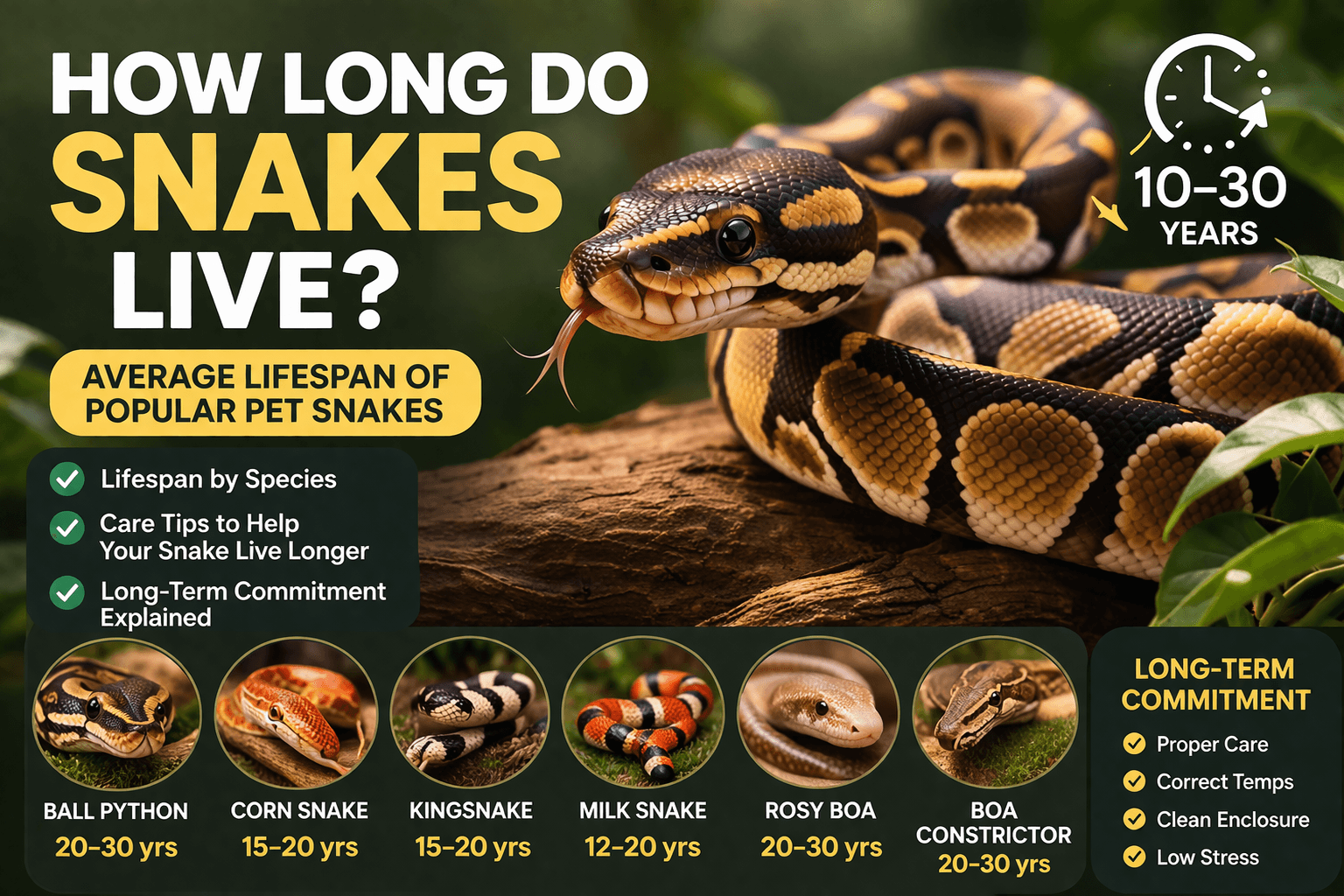
One of the most important questions beginners ask is how long do snakes live. The answer often surprises people. Many pet snakes live much longer than new owners expect, and some can stay with you for decades. That means a snake is not a short-term pet. In many cases, it is a serious long-term commitment.
From my perspective, this is something beginners need to understand before bringing a snake home. A snake is not like a pet you assume will only be around for just a few years. With proper care, many commonly kept snakes live well into their teens or twenties, and some species can live even longer. That is also one reason choosing the right species matters so much, especially if you are still deciding between options like the ones covered in Best Beginner Snakes.
So if you are thinking about getting one, it helps to understand both the average lifespan of pet snakes and the factors that affect how long they live.
Table of Contents
- Why Snake Lifespan Matters More Than Most Beginners Realize
- How Long Do Snakes Live in Captivity?
- Average Lifespan of Popular Pet Snakes
- Ball Python Lifespan
- Corn Snake Lifespan
- Kingsnake Lifespan
- Milk Snake Lifespan
- Garter Snake Lifespan
- Rosy Boa Lifespan
- Kenyan Sand Boa Lifespan
- Boa Constrictor Lifespan
- Children’s Python Lifespan
- Carpet Python Lifespan
- Hognose Snake Lifespan
- Rat Snake Lifespan
- Burmese Python Lifespan
- Green Tree Python Lifespan
- Blood Python Lifespan
- Rainbow Boa Lifespan
- Do Pet Snakes Usually Live Longer Than Wild Snakes?
- What Affects How Long a Snake Lives?
- Is Owning a Snake a Long-Term Commitment?
- Which Pet Snakes Live the Longest?
- Which Pet Snakes Have Shorter Lifespans?
- How to Help Your Snake Live a Long, Healthy Life
- Final Thoughts on How Long Snakes Live
Why Snake Lifespan Matters More Than Most Beginners Realize
A lot of beginners choose a snake based on size, color, or temperament. However, lifespan should be part of that decision too. A calm, manageable snake may seem like a perfect beginner pet, but it may also be an animal you are responsible for for the next 15 to 30 years.
That long lifespan affects a lot more than people think. It affects your budget, your enclosure plans, your ability to upgrade housing over time, and your willingness to provide steady care for years. It also matters when life changes happen, because a snake that lives for decades may still be with you through multiple moves, schedule changes, or financial shifts.
In other words, snakes are often easier day to day than many mammals, but they are still a major commitment over time. That is part of what I was getting at in What Long-Term Snake Keeping Is Really Like. The daily routine may feel simple once you know what you are doing, but the long timeline is something beginners should take seriously from the start.
How Long Do Snakes Live in Captivity?
In captivity, snakes usually live longer than they do in the wild. They are protected from predators, food shortages, habitat pressures, injuries, and harsh environmental swings. They also benefit from steady access to clean water, proper food, and more consistent conditions overall.
A healthy captive snake with proper husbandry often lives significantly longer than a wild snake of the same species. Good temperatures, clean housing, proper feeding, and lower stress all make a major difference. If you get those basics right from the start, your snake has a much better chance of living a long life. That is also why it helps to prepare thoroughly before bringing one home, rather than learning everything afterward.
Average Lifespan of Popular Pet Snakes
Below are realistic lifespan ranges for many of the snakes commonly kept as pets. Individual results vary, of course, but these averages give beginners a better sense of what to expect.
Ball Python Lifespan

Ball pythons are among the most popular pet snakes, and they are also one of the longer-lived options. In captivity, a ball python often lives 20 to 30 years, and some live even longer with excellent care.
This is one reason ball pythons are not a casual purchase. They may be calm and beginner-friendly, but they are still a very long-term pet. Anyone considering one should understand the setup, feeding, and care requirements from the start, which is why your Ball Python Care Guide fits naturally here.
Corn Snake Lifespan

Corn snakes usually live around 15 to 20 years in captivity. Some exceed that range when kept in excellent conditions.
They are popular partly because they are manageable, active, and generally hardy. Even so, a corn snake is still a commitment that can last well over a decade. That makes good early husbandry especially important, and readers who want the full picture can move naturally from here to your Corn Snake Care Guide.
King snake Lifespan

Most king snakes live around 15 to 20 years in captivity. This includes commonly kept species such as the California king snake and Mexican black king snake.
King snakes are often robust feeders and adapt well to captive life, which can help support a long lifespan when their care is correct. Still, their strong feeding response means beginners need to be thoughtful about routine and handling. For anyone considering one specifically, this is a natural place to point them to your King snake Care Guide.
Milk Snake Lifespan

Milk snakes often live about 12 to 20 years in captivity, depending on the species and overall care.
They are often recommended to beginners because of their size and appearance, but like many other colubrids, they can still be with you for many years. So although they may seem like an “easy” option, they still deserve the same long-term planning as any other snake. If someone wants more species-specific information, your Milk Snake Care Guide belongs naturally here.
Garter Snake Lifespan

Garter snakes generally live around 10 to 15 years in captivity, though some live longer.
They tend to have shorter lifespans than some pythons and boas, but they are still far from a short-lived pet. A garter snake can easily be part of your life for a decade or more, which is worth remembering before choosing one based only on size or activity level.
Since you already have a dedicated Garter Snake Care Guide, this is a natural place to send readers who want species-specific care beyond lifespan alone.
Rosy Boa Lifespan

Rosy boas are known for being hardy and long-lived. In captivity, they often live around 20 to 30 years.
That makes them a great example of a snake that may look small and simple to care for, yet still represents a very long commitment. Their smaller size can sometimes make beginners underestimate that commitment, but their lifespan says otherwise. Readers who are seriously considering one can continue into your Rosy Boa Care Guide from here.
Kenyan Sand Boa Lifespan

Kenyan sand boas usually live around 15 to 20 years in captivity. With proper husbandry, some can live longer.
Because they stay relatively small, beginners sometimes assume they are a lower-commitment option. In terms of space, maybe. In terms of years, not really. Their lifespan is still substantial, which is something worth emphasizing to anyone considering a compact pet snake. This section also links naturally to your Sand Boa Care Guide.
Boa Constrictor Lifespan

Boa constrictors commonly live 20 to 30 years in captivity, and some surpass that.
This is especially important to understand before buying one. A boa is not only a larger snake that needs more room, but also an animal that may stay with you for decades. That combination of size and lifespan makes species choice especially important for beginners. Readers looking into the species more deeply can naturally continue to your Boa Constrictor Care Guide.
Children’s Python Lifespan

Children’s pythons often live around 20 to 25 years in captivity. They are a great reminder that even smaller pythons can be very long-lived.
Their manageable size does not mean a short commitment. In fact, that is true of many smaller pet snakes. A snake may be physically easy to house compared to a giant species, but it can still be part of your life for a very long time. This is also a natural internal link spot for your Children’s Python Care Guide.
Carpet Python Lifespan

Carpet pythons usually live 15 to 25 years in captivity, depending on lineage, care, and general health over time.
They are beautiful and rewarding to keep, but they also require an owner who is prepared for a long-term responsibility. That is why beginners should think beyond appearance and consider daily care, adult size, and lifespan together.
Hognose Snake Lifespan

Western hognose snakes often live around 12 to 18 years in captivity. Some may live longer.
That makes them somewhat shorter-lived than some pythons and boas, but still long enough that owners should plan well ahead. They are not a temporary pet by any reasonable standard.
Rat Snake Lifespan

Rat snakes, including black rat snakes and related species sometimes kept in captivity, often live around 15 to 20 years.
As with corn snakes and king snakes, strong husbandry habits can make a major difference in long-term health. Correct temperatures, feeding, and enclosure hygiene all matter more over time than many beginners realize at first.
Burmese Python Lifespan

Burmese pythons can live around 20 to 25 years in captivity, sometimes longer.
This is one of many reasons they are not appropriate for most beginners. Their size alone is demanding, and their long lifespan adds even more responsibility. A snake like this is not just difficult to house. It is also a commitment that may last decades.
Green Tree Python Lifespan

Green tree pythons often live about 15 to 20 years in captivity. Because they can be more sensitive than some beginner species, care quality plays a huge role in whether they thrive long term.
This is another good example of why lifespan is only part of the picture. A snake may have the potential to live a long time, but reaching that potential depends heavily on correct care.
Blood Python Lifespan

Blood pythons commonly live 20 years or more in captivity when cared for properly.
They are another example of a snake that may not be the best fit for casual owners because both lifespan and husbandry requirements need to be taken seriously from the start.
Rainbow Boa Lifespan

Rainbow boas often live around 20 years in captivity, and sometimes longer.
Humidity control, cleanliness, and stable care matter a lot with this species. When those things are done well, they can be long-lived and rewarding to keep.
Do Pet Snakes Usually Live Longer Than Wild Snakes?
Yes, in most cases they do. Wild snakes face many threats that captive snakes do not. Predators, poor weather, injuries, parasites, and inconsistent access to prey all reduce survival in the wild.
A pet snake kept in a secure enclosure with proper temperatures, clean water, suitable prey, and regular observation usually has a much better chance of reaching old age. That said, captivity only helps if the care is actually good. Poor husbandry can shorten a snake’s life significantly, even in a protected environment.
What Affects How Long a Snake Lives?
Species matters, but it is not the only factor. Several parts of snake care influence lifespan over time.
Proper Temperatures
Temperature affects digestion, immune function, metabolism, and overall health. A snake kept at the wrong temperature for long periods may struggle in ways that are not always obvious at first.
That is why heat management is one of the most important parts of long-term snake care. If readers need a deeper breakdown, Ideal Snake Temperature Explained is a strong internal link here because good temperatures are directly tied to long-term health and lifespan.
Correct Feeding
Both underfeeding and overfeeding can create problems. Prey size, feeding frequency, and body condition all matter.
A snake that is consistently fed inappropriate meals may become unhealthy over time, even if it seems fine in the short term. Feeding mistakes are especially common with beginners, which is why it also makes sense to guide readers toward What Do Snakes Eat in Captivity? for a broader overview of proper snake diets.
Clean Enclosure Conditions
Dirty substrate, waste left too long, and poor hygiene can all contribute to health problems. Cleanliness may seem basic, but over the years it plays a major role in whether a snake stays healthy.
This is one of those habits that quietly supports a long lifespan. A natural internal link here is How Often Should You Replace Snake Substrate? because substrate maintenance is one of the routine care tasks that directly affects long-term health.
Low Stress
Chronic stress can affect appetite, behavior, and immune function. A snake that constantly feels exposed, insecure, or disturbed may not thrive the way a well-settled snake does.
Proper hides, correct setup, and consistent handling routines all help reduce unnecessary stress. Readers who are still learning to recognize stress signals could naturally be pointed to How to Tell if a Snake Is Stressed, since stress management is closely tied to long-term success.
Access to Veterinary Care
Even hardy snakes sometimes need medical attention. Respiratory infections, parasites, mouth issues, retained shed problems, and other health concerns can become serious if ignored.
Recognizing when something is wrong matters. That is why When Should You Take a Snake to the Vet? fits naturally here. Lifespan is not just about daily care. It is also about catching problems before they become major setbacks.
Species Selection
Some snakes are naturally more forgiving than others. A hardy beginner species usually has a better chance of living a full lifespan in a beginner home than a delicate species placed with an unprepared owner.
That is another reason readers who are still deciding should be guided back toward Best Beginner Snakes rather than choosing only by appearance.
Is Owning a Snake a Long-Term Commitment?
Yes, absolutely. In fact, this is one of the biggest points beginners should take seriously.
A snake might not need daily walks, constant attention, or noisy interaction, but many species live for a very long time. Getting a snake means committing to years of feeding, cleaning, temperature control, observation, and general care. That reality is often easy to overlook when someone is only thinking about the first setup or the excitement of bringing a new pet home.
This also ties into the adjustment period many beginners worry about early on. The first days and weeks matter, of course, but snake keeping should always be viewed as a long game, not just an initial setup phase. That makes First Week with a New Snake: What’s Normal and What’s Not and How Long Does It Take for a Snake to Settle In? both natural supporting links from this section.
Which Pet Snakes Live the Longest?
Among commonly kept pet snakes, some of the longer-lived species include:
- ball pythons
- rosy boas
- boa constrictors
- children’s pythons
- blood pythons
These snakes often live 20 years or more, and in some cases closer to 30 years with excellent care.
That does not automatically make them the best choice for every beginner, but it does show why lifespan should be part of the decision before bringing one home.
Which Pet Snakes Have Shorter Lifespans?
Even the shorter-lived pet snakes usually still live for many years. Species such as garter snakes and some hognose snakes may have somewhat shorter average lifespans than boas and pythons, but they still often live around a decade or more.
So while there are differences between species, very few commonly kept pet snakes should ever be thought of as short-term pets.
How to Help Your Snake Live a Long, Healthy Life
If you want your snake to live as long as possible, focus on the fundamentals. Choose a species you can realistically care for long term, provide correct temperatures and humidity, feed appropriately sized prey, keep the enclosure clean, reduce stress, and respond quickly when something seems wrong.
In my experience, long-term success with snakes usually comes from consistency more than anything else. Good care done steadily over years matters far more than occasional bursts of effort. That same idea also comes through in Common Snake Care Mistakes Beginners Make, because avoiding simple repeated mistakes is often what helps snakes stay healthy over the long haul.
Final Thoughts on How Long Snakes Live
So, how long do snakes live? In captivity, many pet snakes live 10 to 30 years, depending on the species and the care they receive. That means a snake is often much more of a long-term commitment than beginners expect.
This is not meant to discourage anyone from getting a snake. It is meant to help people make better decisions before they bring one home. When chosen carefully and cared for properly, a snake can be an incredibly rewarding pet for many years.
If you are still deciding on a species, think about more than appearance or size. Lifespan matters too. The best beginner snake is not just one you like today, but one you are prepared to care for for the long haul.


